

The Permian AI Intelligence Brief
Executive Summary
August 1, 2026
The most consequential development is the rapidly escalating political challenge to Texas’ proposed 765-kV transmission buildout. Senior state leaders are now calling for current applications to be rejected or paused while the approval process is rewritten. Because the project is intended to move more electricity into West Texas, any delay could affect oilfield electrification, industrial expansion, AI infrastructure and data-center siting across the Permian Basin.
At the same time, Texas regulators are seeking broader authority over data centers, including direct emergency communication, mandatory registration and stronger protections against shifting grid-upgrade costs to residential customers. A separate $15 billion financing effort for a 1.6-GW natural-gas-powered AI campus in Central Texas shows how quickly the market is moving toward privately financed, behind-the-meter power.
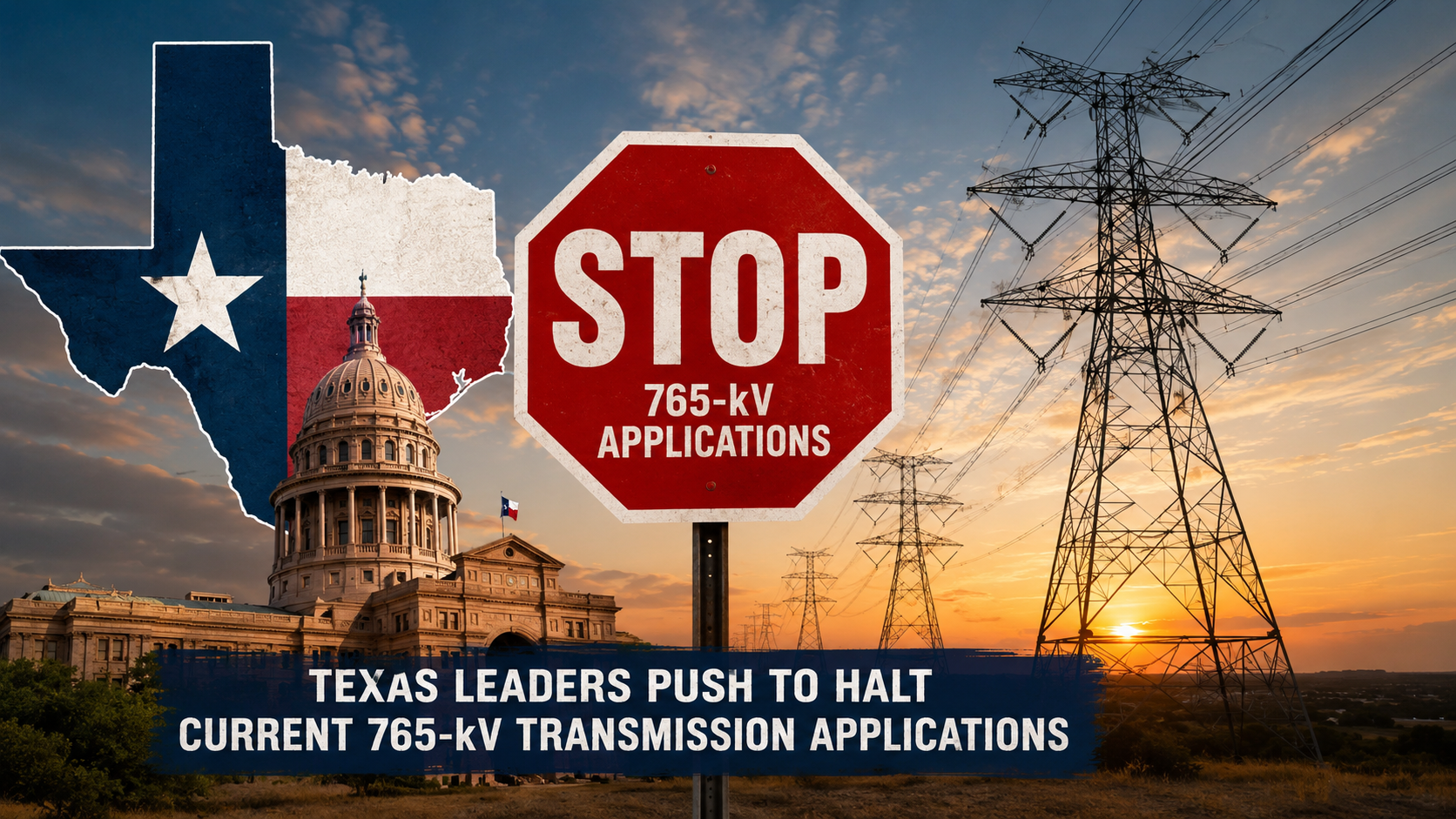
1. Texas leaders push to halt current 765-kV transmission applications
Texas Senate Business & Commerce Chairman Charles Schwertner called for the Public Utility Commission to reject current applications associated with the major high-voltage transmission initiative. Lt. Gov. Dan Patrick supported reforming the approval process, while acknowledging that the lines may still be necessary. The dispute follows extensive landowner testimony involving notice, routing, eminent domain and due-process concerns.
Why it matters to West Texas
The Permian Basin Reliability Plan is designed to address a long-standing shortage of transmission capacity serving West Texas oil and gas operations. A significant delay could constrain electrification, increase reliance on local generation and potentially affect the timing of AI and data-center projects that require large amounts of dependable power. Industry representatives argue that insufficient transmission is already limiting growth in the Permian.
2. PUC and ERCOT seek expanded authority over data centers
Texas regulators say lawmakers should give them greater authority to manage large data-center loads. Proposed changes include requiring large users to register with the state, allowing ERCOT to communicate directly with data centers during emergencies and extending critical-infrastructure restrictions involving foreign-linked entities. Regulators are also developing a program encouraging large loads to reduce consumption ahead of anticipated grid emergencies.
Governor Greg Abbott previously directed the PUC and ERCOT to require data centers to fund the infrastructure needed to serve them, protect residential customers from cost shifting and address water usage, reporting, tax incentives, setbacks and noise.
Why it matters to the Permian Basin
The regulatory environment is becoming a major site-selection factor. West Texas projects built around dedicated natural-gas generation may avoid some transmission constraints, but they will still face increasing scrutiny involving water, air emissions, grid interaction, local infrastructure and community impacts.
3. Google-backed Anthropic campus advances a gas-powered financing model
Banks led by Morgan Stanley are reportedly discussing approximately $15 billion in financing for a Nexus Data Centers campus in Hubbard, Texas. The development would include a dedicated 1.6-GW natural-gas power plant, while Google would provide financial guarantees and computing equipment supporting Anthropic’s operations.
Why it matters
This is another strong signal that AI developers are moving beyond conventional utility interconnections toward integrated campuses with privately financed power. The model directly supports the Permian Basin’s value proposition: abundant natural gas, available land and the ability to build generation close to large computing loads.
It also raises the competitive stakes. West Texas must demonstrate not only fuel availability, but also credible execution in generation development, fiber connectivity, water strategy, permitting and workforce.
4. Calls for statewide data-center regulation are spreading
Officials in Laredo announced plans to create a local framework addressing electricity, water, environmental effects and long-term sustainability. State Rep. Richard Peña Raymond also called for a special legislative session and a temporary statewide moratorium while Texas develops consistent standards. No statewide moratorium has been enacted, but the announcement reflects growing political pressure.

Why it matters
Community acceptance is becoming as important as power availability. West Texas developments that enter communities without transparent plans for water use, taxes, jobs, noise, emissions and emergency operations could face delays or political opposition.
Strategic Outlook
Three forces are now converging:
Transmission uncertainty may delay grid-dependent projects.
Stronger regulation will increase requirements for cost responsibility, flexibility and transparency.
Behind-the-meter natural-gas generation is gaining credibility as a financeable pathway for very large AI campuses.
For the Permian Basin, this creates both risk and opportunity. The region’s strongest position is likely to be an integrated offering built around reliable gas generation, responsible water planning, substantial fiber capacity, local workforce development and early community engagement.
Topics to Watch Next
The immediate priorities are the PUC’s response to the 765-kV opposition, details of the proposed large-load demand-reduction program, final financing for the Anthropic project and any movement toward a special legislative session or statewide data-center standards.